


Wheelchair restraints are devices used in WAVs (wheelchair accessible vehicles) to lock the wheelchair in place while transporting a wheelchair passenger in the vehicle.
The basics…
Wheelchair restraints are the most important safety feature in wheelchair accessible vehicles (WAVs), designed to keep the wheelchair and its occupant secure during transport. These restraints typically consist of a combination of straps and anchors, which are used to anchor the wheelchair to the vehicle.
Here’s how wheelchair restraints work when used in a typical WAV:
The vehicle is fitted with a set of anchor points that are located in the floor of the vehicle. These anchor points are typically positioned at specific locations within the vehicle to provide the most secure and stable base for the wheelchair.
The wheelchair is positioned in the vehicle so that the wheels are aligned with the anchor points.
The wheelchair is then connected to the anchor points in the vehicle, with straps and hooks. The wheelchair passenger is secured by a seatbelt connected to the car.
Once the restraints are securely connected, the wheelchair and its occupant are effectively anchored to the vehicle. This provides stability and safety during transport, preventing the wheelchair from moving or tipping over.
The wheelchair occupant must always wear the seatbelt while in the vehicle, in addition, the wheelchair must be secured by the restraints – you must never drive a vehicle with an unsecured wheelchair to prevent injuries.
It’s important to note that different types of wheelchair restraints may have slightly different designs and methods of operation. However, the basic principles of how they work are similar across most types of wheelchair accessible vehicles.
How do the wheelchair restraints work?
In a standard WAV there are four restraints* – two at the front and two at the rear. In addition to the restraints there is a seatbelt to secure the wheelchair passenger in place.
A good way to think about restraints is that they lock the wheelchair in place and effectively turn it into a static seat..
In most modern WAVs the front restraints are electronic – this means they can switched on or off at the touch of a button. When they are switched ON the restraint belt can be pulled out freeley to attach or release the wheelchair. When the restraint is switched OFF the belts will retract into the restraint but cannot be pulled out – this makes sure that once attached to the wheelchair they cannot move.
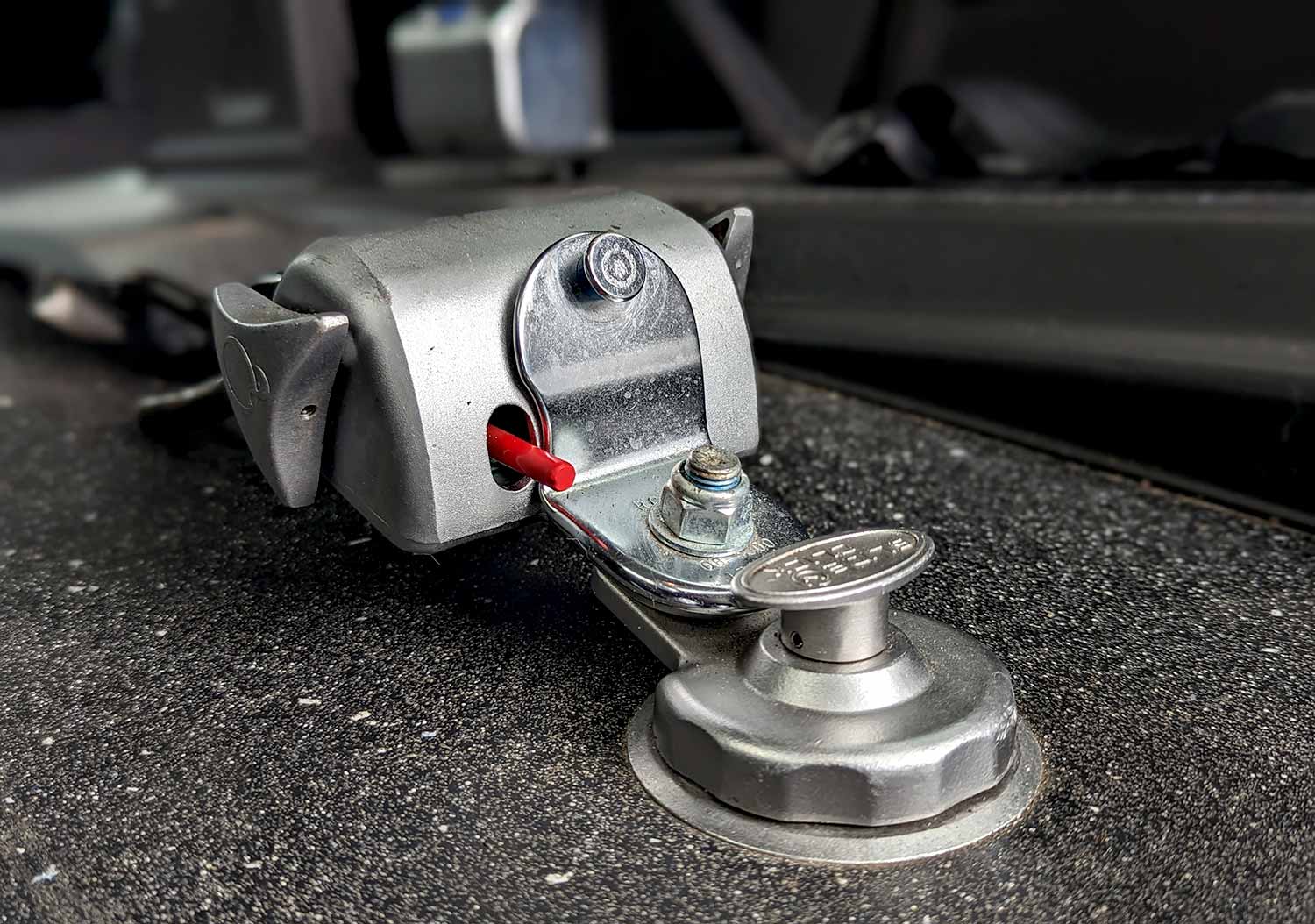
The rear restraints use a ratchet system, with the lever pushed down the belts can be pulled out, once the lever is released the belts will retract but can no longer be pulled out.
Often, the front restraints are built into the vehicle, although sometimes they are removeable. The rear restraints are almost always removeable, this is handy sometimes when boarding certain wheelchair or if you are using the vehicle for something other than transporting a wheelchair. In larger WAVs, they sometimes come with floor tracking which allows the restraints to be positioned in various locations along the length (and sometimes width) of the WAV so the wheelchair (or even multiple wheelchairs) can be positioned in the best way for your passenger.
Can someone show me how to use them
Yes, when you buy or rent a car from WavsGB – we will carefully take the time to show you how to use the vehicle correctly including the wheelchair restraints.
If you’d like to know more and get a demonstration before you buy – you can pop into our showroom in Bath and one of our team members will happily show you how to use the restraints.